What to do in the age of code printing
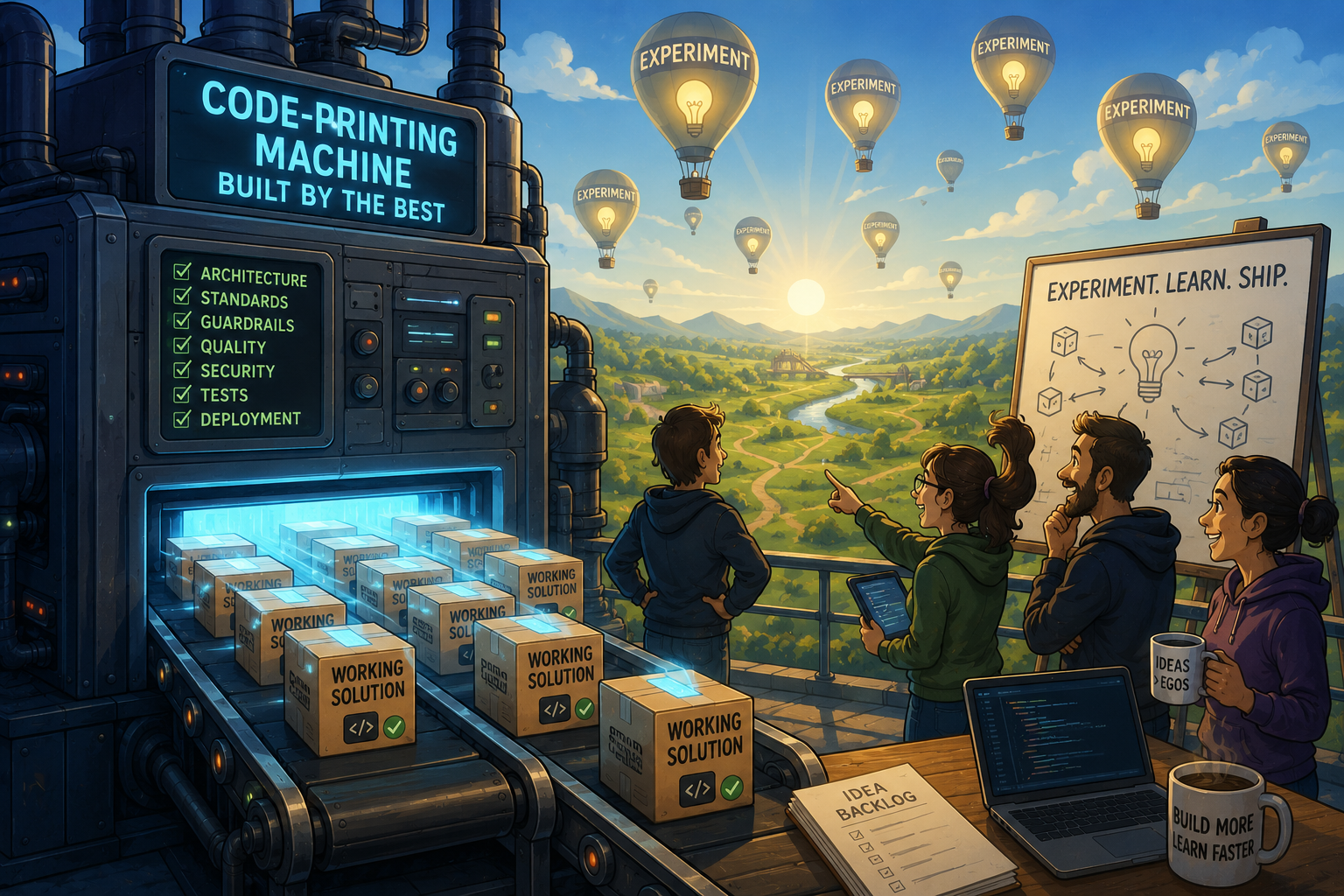
Replying to waldo's post on shared versus personal AI scaffolding, Vjeko argues that top engineers should build one tightly constrained code-printing machine for everyone in the company to use. Developers become operators who still own the design. Cheap construction then lets teams try many ideas for what one used to cost.
Open in Claudehttps-vjeko-com-2026-07-01-what-to-do-in-the-age-of-code-printing--30e9caf25f.mdRead the original on Vjeko.com
 post Vjeko.com
"We can try fifty different ideas at the historic cost of trying one."
Key points
- Standardized AI scaffolding controlled by top engineers produces better outcomes than letting each developer build their own approach
- Design responsibility remains with humans while machine operators handle construction using tight scaffolding and constraints
- AI-driven development enables rapid experimentation at scale, allowing teams to explore many ideas instead of committing to a single path
- The approach combines constraint-based automation with human creativity for discovery and innovation
Quotes
- “We can try fifty different ideas at the historic cost of trying one.” (Explains the business value of centralized scaffolding enabling rapid experimentation)
- “It needs constraints. It needs guidance. It needs the scaffolding.” (Emphasizes that AI code generation requires human-designed structure and governance)
Heads up
- gotcha: “it also may happen that it produces junk at cosmic scale.”
Context
- Features: code printing machines, scaffolding constraints, machine operators model, spec-driven development, automated code generation
Source: Vjeko.com, community blog. Summary, key points and quotes are derived (CONTENT-NOTICE.md); read the original for the full text.